Water · Denver
Why is there water under the crisper drawers?
The short answer
Almost always because the defrost drain is blocked, so the meltwater every cycle produces runs forward into the floor of the cabinet instead of away down the tube. Sub-Zero Appliance Repair Denver clears and tests that drain on the first visit — (303) 729-0972.
$89 service call, credited against the repair.
Before you call
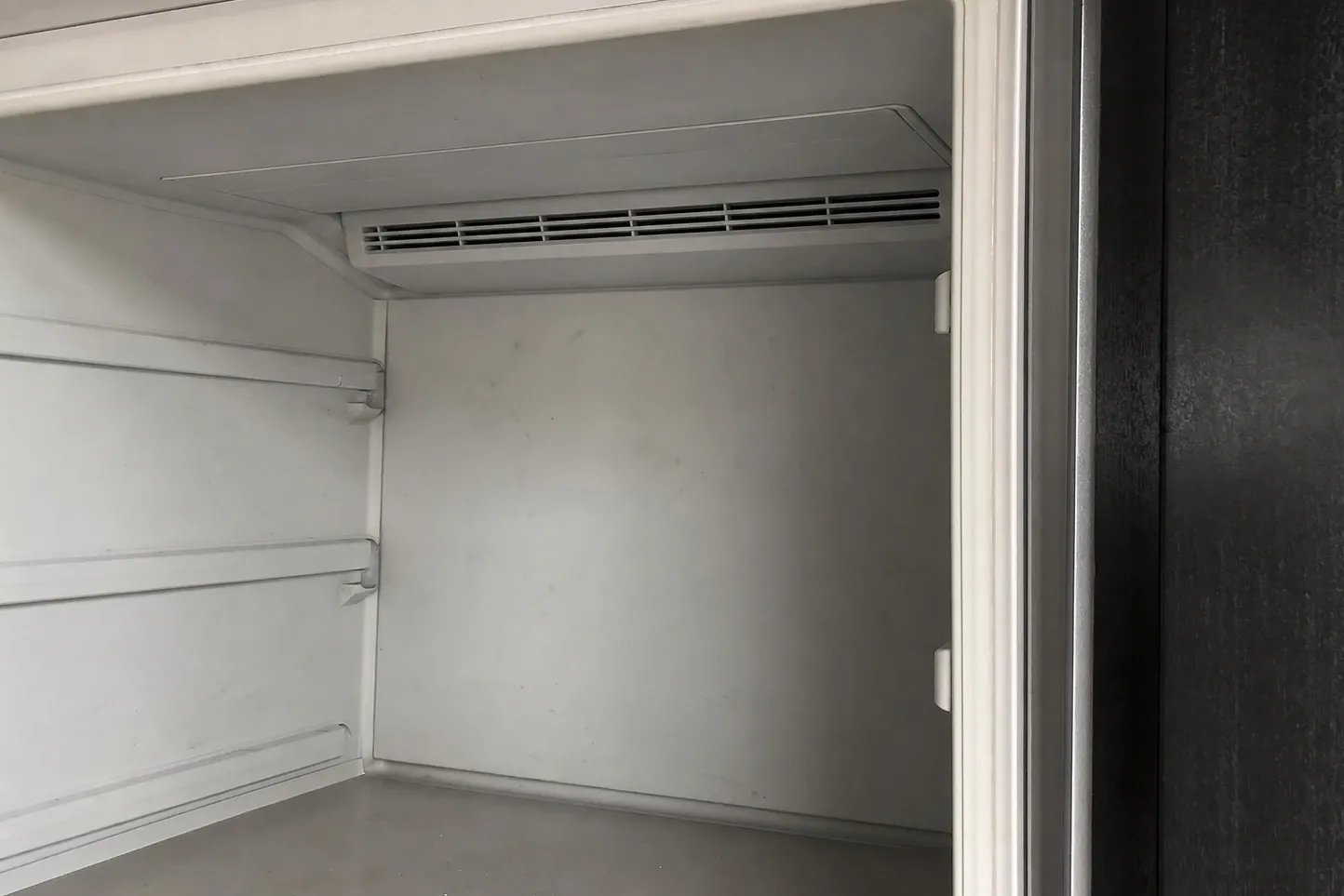
- Open the door and look at the back wall of the fridge section. Condensation, a bloom of frost or a skin of ice there is the start of the trail.
- Lift the drawers out and find the trough along the back of the cabinet floor. Standing water or packed debris in it is your blockage.
- Lift out what is loose with your fingers or a cloth. Never push a brush or a wire into the tube itself — the manufacturer warns that it pierces.
- Look through the grille at the condenser. Sub-Zero asks for it to be cleared every six to twelve months, and a choked one runs the system harder.
Stop here and call Sub-Zero Appliance Repair Denver on (303) 729-0972 if the trough is clear and the water returns, or if the cabinet is a Classic, Designer, 700 or 648PRO.
What it usually turns out to be
-
A blocked defrost drain
The water is clean, it appears in the hours after a defrost rather than steadily, and the floor of the cabinet is wet before the kitchen floor is.
Quoted after the diagnosis
-
A door that is not sealing
Warm room air pulled in all day makes far more condensate than the drain was built to carry, and a trough that used to cope stops coping.
Door gasket or seal replacement$260–$700
-
A condenser buried in dust
The system runs in longer stretches, produces more meltwater per day, and the drain crosses from just coping to not coping without anything else changing.
Quoted after the diagnosis
When it is worth a visit
If the trough is clear and the water is back inside a week, the blockage is further down the tube. On a Classic, Designer, 700, 400 or 648PRO cabinet the manufacturer's own answer page says that tube is cleared by a technician rather than from inside the cabinet, and that is the visit to book.
Where the water actually goes
Every cold cabinet makes water. The evaporator frosts up in normal running, a defrost cycle melts that frost off on a schedule, and the water is supposed to run down a trough at the back of the fridge section, into a tube, and out to a shallow pan by the machine compartment, where the unit’s own heat carries it off.
Nothing in that chain is dramatic, which is why a blockage takes so long to spot. The trough fills, the next cycle tops it up, and the overflow goes the only way it can — forward, under the drawers, along the floor of the cabinet. By the time it reaches the front lip it has been going on for weeks.
Follow-up questions
Can I pour anything down the drain to shift it?
On the older 500 and 600 series cabinets Sub-Zero publishes a flush for the trough: warm water with a capful or two of bleach and a few drops of dish detergent, poured in until it stops backing up. What it tells you never to do, on any series, is unhook the tube or push a brush into it.
Is water under the drawers actually doing any harm?
It pools under the drawers first, then finds the front lip and runs onto the floor, and a cabinet set into joinery is the worst possible place for that to happen quietly. Sub-Zero Appliance Repair Denver treats a wet drain as something to deal with now rather than watch for a fortnight.
Why is there no frost on the back wall if the drain is the problem?
Dry air. Around here the meltwater on a cold surface goes off into the room faster than it can build into a sheet you would notice, so the first thing anyone sees is a puddle under the drawers rather than ice. The cause underneath is the same either way.
Talk to someone
Still doing it after the checks?
Say what changed and in what order, and the technician packs for that fault rather than for a guess. Technicians work 8:00 am to 8:00 pm, any day of the week, and the line takes a call 24/7.