Doors and panels · Denver
Why is the door so hard to open right after closing?
The short answer
Because the cabinet is genuinely airtight. Closing it pushes room air against very cold air, the pressure inside dips while the two settle, and the door holds until they do. Sub-Zero Appliance Repair Denver calls that a fault only when it lasts — (303) 729-0972.
$89 service call, credited against the repair.
Before you call
- Let the door settle for a moment before pulling again, instead of wrestling it straight away.
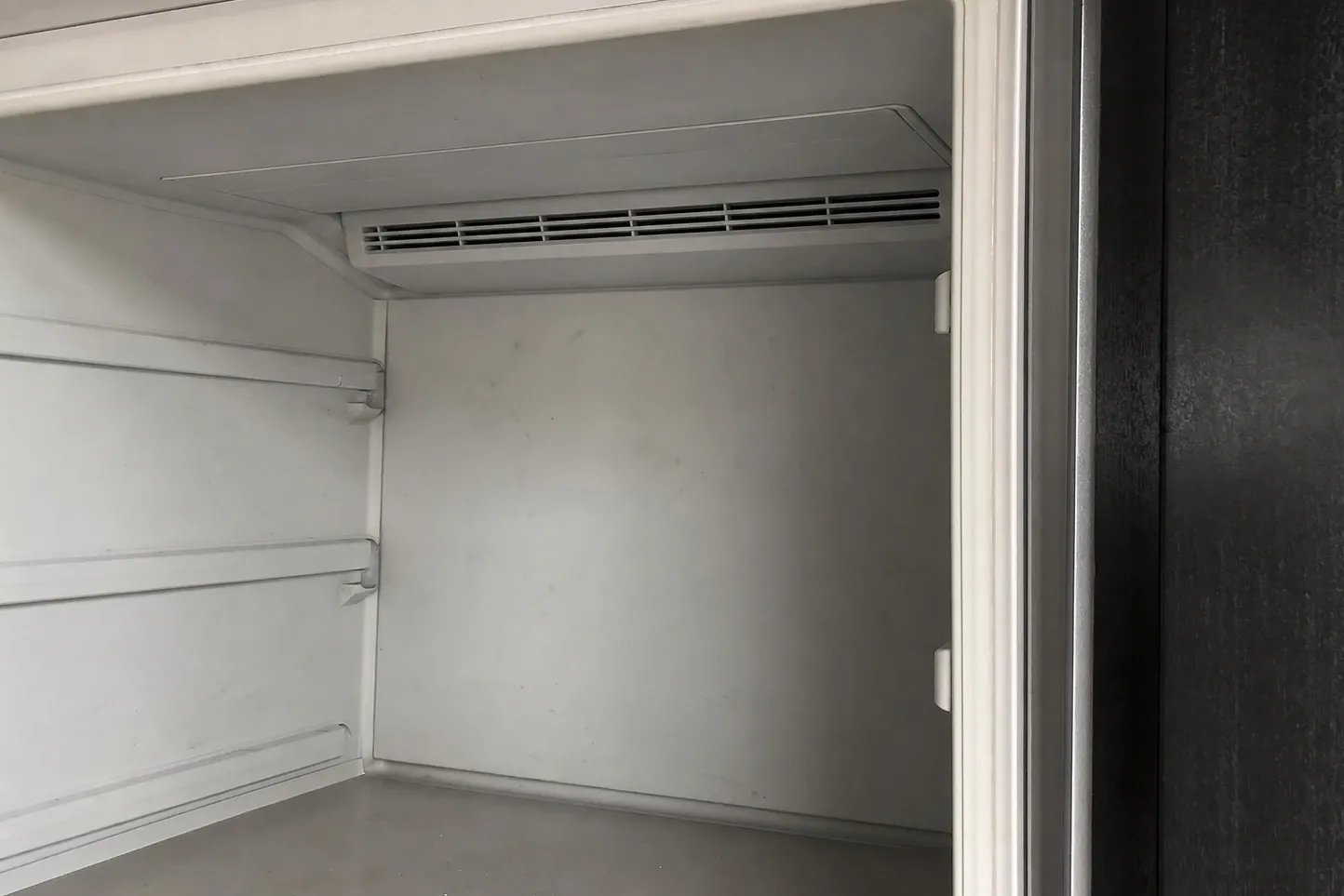
- Look at the rear wall inside for beads of damp, a light fur of frost, or glazed ice.
- Check the freezer side for a build-up of ice anywhere it has no business being.
- Look through the grille at the condenser and clear it if the fins are furred with dust.
- Keep grease and petroleum jelly off the plastic face frame; Sub-Zero warns that lubricants can crack or break it down.
Stop here and call Sub-Zero Appliance Repair Denver on (303) 729-0972 if the grip is still fierce long after the door shut, or it has changed lately.
What it usually turns out to be
-
Pressure evening out
It comes immediately after the door shuts, eases by itself, and bites hardest when the kitchen is warm and the box is very cold.
Quoted after the diagnosis
-
A condenser smothered in dust
The system runs in longer stretches, the compartment sits colder against a warm room, and the suction after each closing is stronger than you remember.
Quoted after the diagnosis
-
Frost or ice inside
A sheet on the rear wall or ice around the freezer changes how the compartment handles moisture, and the grip stops easing off the way it used to.
Quoted after the diagnosis
-
A pull that never relents
The manufacturer treats a strong door pull that outlives the pressure difference as something to look at, not a habit to live around.
Quoted after the diagnosis
When it is worth a visit
If the door still fights you long after it shut, or if this started in a kitchen that has not changed, the airtight explanation has run out. The same goes if there is frost on the rear wall or damp on the liner, because then the moisture getting in is the real subject.
Airtight is the whole point
A built-in earns its running costs at the seal line. The cabinet is put together to keep room air out entirely, and the price of that is a few seconds of physics every time you shut it: warm air goes in, chills, takes up less room, and the outside of the door is briefly pushing harder than the inside.
Which is why the thing people describe as a fault is usually the feature working. What turns it into a fault is time. When the grip has not let go long after the door closed, something else is keeping the inside colder and drier than it should be — ice in the wrong place, a system running too long — and the door is simply the part of it you can feel with your hand.
Follow-up questions
Is a stiff door a sign the seal is worn out?
Generally the opposite. A tired strip lets air trickle back in, the pressure evens out almost at once, and the door opens too easily rather than too hard. A door that grips is a door sealing well, which is why the manufacturer's own answer calls the stiffness normal first.
Can I stop it happening at all?
Not really, and it would be a poor trade. The airtightness is what keeps the box cold and the running time short. Opening the door less in a hot kitchen helps a little; keeping the condenser clear helps more, because a system that runs less draws a gentler vacuum.
The freezer drawer is far worse than the fridge door. Why?
Freezer air sits further from room temperature, so the pressure gap across that front is larger and the grip holds longer. On an over and under cabinet that is expected. Sub-Zero Appliance Repair Denver looks at it when the drawer has to be wrestled rather than eased, on (303) 729-0972.
Talk to someone
Still doing it after the checks?
Say what changed and in what order, and the technician packs for that fault rather than for a guess. Technicians work 8:00 am to 8:00 pm, any day of the week, and the line takes a call 24/7.