Lights, smells, heat · Denver
Why are the sides or frame hot to the touch?
The short answer
Because the cold inside has to come from somewhere, and what it costs is heat pushed out into your kitchen. Warmth along the frame and at the grille is the system working. Sub-Zero Appliance Repair Denver checks where that heat is going — (303) 729-0972.
$89 service call, credited against the repair.
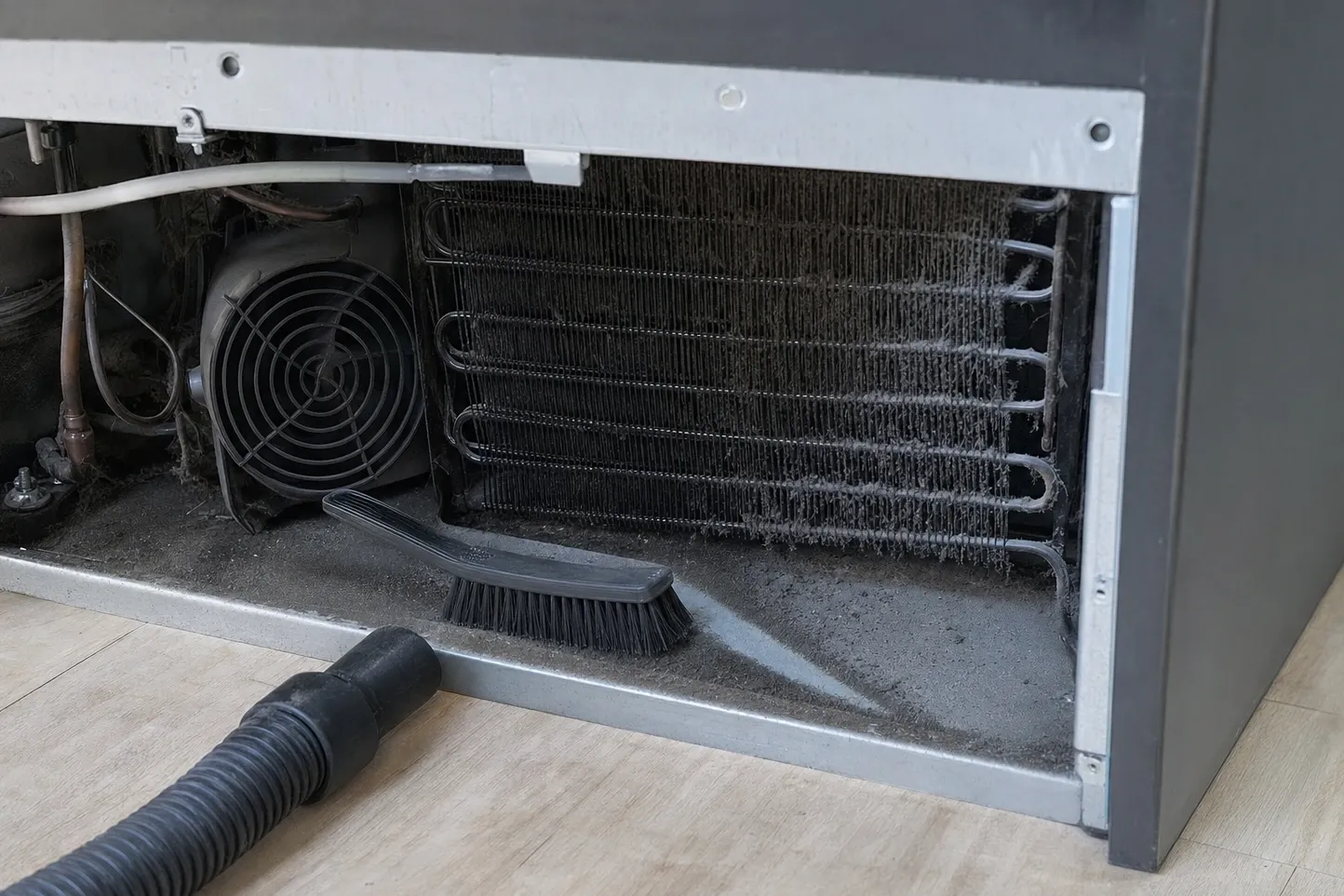
Before you call
- Shine a torch through the lower grille: a grey blanket over the fins means the coil cannot shed anything.
- Vacuum it with a soft brush head. Sub-Zero asks for that every six to twelve months, and sooner where there are pets.
- Leave the fins straight and the spray cleaners in the cupboard; the manufacturer says neither is wanted.
- Think about the room. These cabinets are designed for a kitchen between sixty and ninety degrees, not a sun-trap.
- Check nothing is stacked tight against the side panels and the grille is clipped back where it belongs.
Stop here and call Sub-Zero Appliance Repair Denver on (303) 729-0972 if the case still runs hot once the coil is clear and the room is inside that range.
What it usually turns out to be
-
A condenser buried in lint
The fins look grey rather than metallic, and heat that should leave through them comes out through the case instead.
Quoted after the diagnosis
-
A condenser fan that has stopped
With the grille off the bay is hot and oddly still, and the background sound the kitchen was used to has changed.
Evaporator or condenser fan motor$320–$740
-
Warm air going round again
A grille refitted the wrong way up, or storage pressed against the front, feeds the coil the air it just heated.
Quoted after the diagnosis
When it is worth a visit
Sub-Zero's own answer on a cabinet that sweats sends you to the same two things first: the temperatures set properly and the condenser clean. Do both, give it a day, and if the sides are still uncomfortable to rest a hand on, book the visit rather than repeating the clean.
Where the heat is supposed to go
Nothing makes cold. A refrigeration system collects heat from inside the box and dumps it somewhere else, and on a built-in that somewhere is a finned coil tucked behind the grille, with a fan pushing kitchen air across it. Every degree taken off your food arrives in the room, and the case warms on the way.
That is why the coil is the first thing to look at and the room is the second. An older house around Country Club or Montclair, where a big cabinet was squeezed into a nineteen-twenties niche with barely a hand’s width of air around it, will run warmer to the touch than the same model standing in a newer kitchen south of town with clearance all round it.
Follow-up questions
Is the frame between the doors meant to be warm?
Some warmth there is ordinary, and so is a little sweating on the outside in a hot or humid kitchen. What the manufacturer does not accept is dripping. Water running down the front, or a frame too hot to keep a hand on, is worth a look rather than a shrug.
Does dry Colorado air change any of this?
It changes what you notice, not what is happening. Our air rarely lets an exterior sweat, so the visible warning most owners rely on never appears here, while cottonwood fluff and household dust load the coil every summer regardless. Heat on the case becomes the symptom you get instead.
So how hot is too hot to ignore?
Nobody can give you a useful number through a screen, because the case, the joinery and the kitchen all change it. The test worth trusting is whether it got hotter than it used to be, and whether clearing the coil pulled it back. Sub-Zero Appliance Repair Denver measures the rest.
Talk to someone
Still doing it after the checks?
Say what changed and in what order, and the technician packs for that fault rather than for a guess. Technicians work 8:00 am to 8:00 pm, any day of the week, and the line takes a call 24/7.